AI Medical Scribe for
Occupational Therapists
Keep your hands on the client, not the keyboard. Medical Scribe drafts OT notes that tie every intervention to a functional goal — with the skilled-need language payers expect.
AI Medical Scribe for
Keep your hands on the client, not the keyboard. Medical Scribe drafts OT notes that tie every intervention to a functional goal — with the skilled-need language payers expect.
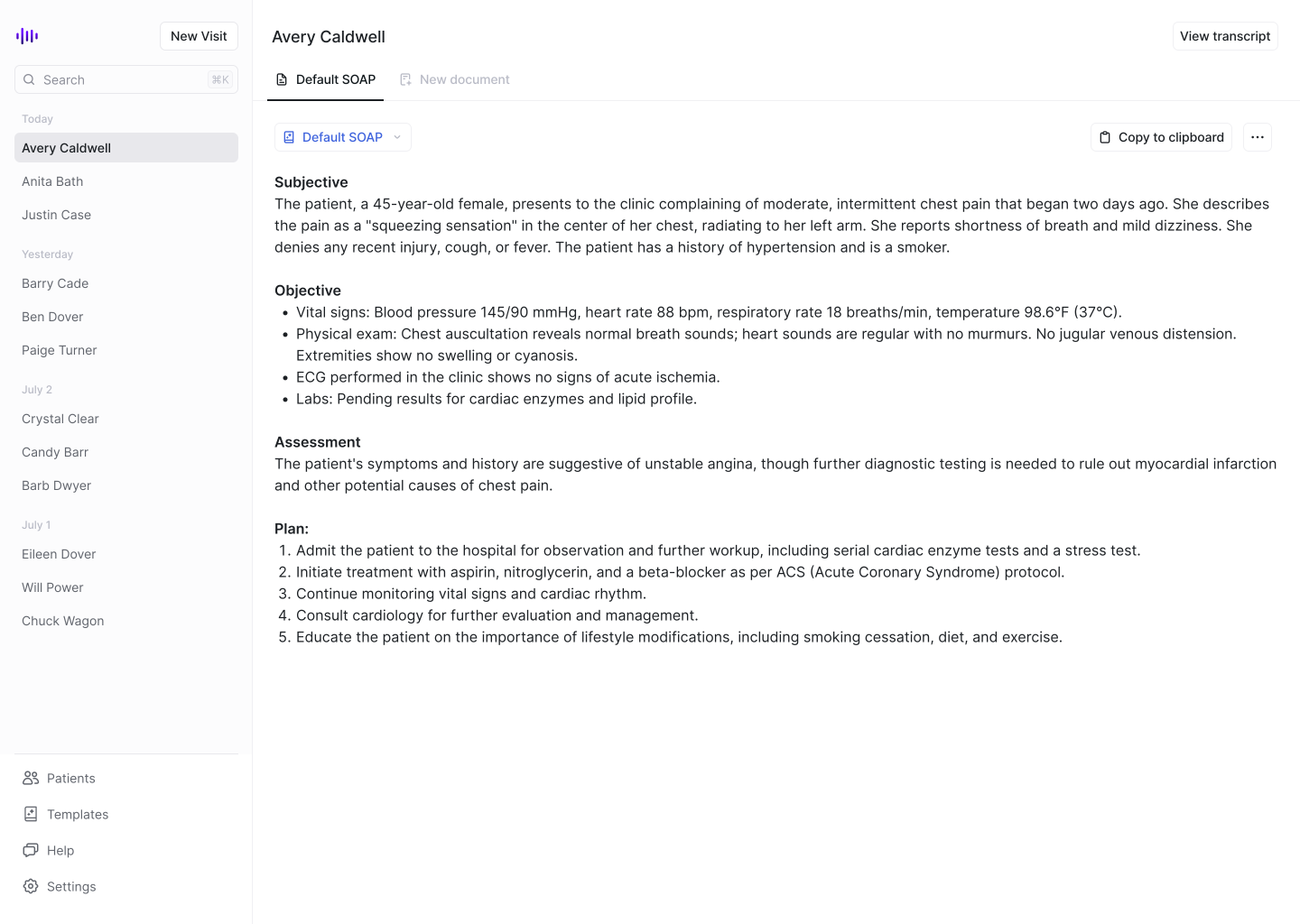
A real example of the documentation Medical Scribe generates for occupational therapists — ready before your patient leaves the room.
68F, 6 weeks s/p ORIF right distal radius fracture (dominant hand). Reports continued difficulty opening jars, fastening buttons, and preparing meals. Pain 3/10 on VAS with resisted grip, down from 5/10. Goal: return to gardening and independent meal prep.
Progressing toward functional goals — wrist extension and grip improving, pain decreasing. Continued skilled intervention required to restore grip strength and fine motor coordination for independence in meal preparation, dressing, and return to gardening.
Illustrative example. Every note is fully editable, and you control the format — SOAP, DAP, or your own custom template.
Every treatment session needs its own note — plus progress notes, re-evals, and home program updates. With a full caseload, that's hours of typing after your last client leaves.
Medicare and commercial payers want measurable functional progress and a clear reason skilled OT is still necessary. Copy-forward notes that list the same exercises invite denials.
You're facilitating a transfer, grading a fine motor task, or fitting adaptive equipment. Stopping to type mid-session isn't an option — so the details get reconstructed from memory later.
Narrate the session as you run it — ADL retraining, fine motor work, transfers, adaptive equipment trials — and the note connects each activity to the client's stated functional goals, from buttoning a shirt to returning to work.
When you verbalize grading, cueing levels, and why skilled intervention is still required, that reasoning lands in the Assessment — so your notes show medical necessity instead of a repeated exercise list.
Real-time transcription that understands medical terminology and clinical context.
Recognizes terms, conditions, and procedures specific to your practice area.
Generate comprehensive clinical notes in minutes instead of hours.
Enterprise-grade encryption and security to protect sensitive data.
These aren't generic formats — they ship in the product today, structured around how you actually document.
Plus 280+ templates across every specialty — or build your own in minutes.
Whether it’s an initial eval with COPM goal-setting, a hand therapy session, a pediatric fine motor block, or a home safety assessment, Medical Scribe records the session (in person or telehealth) and drafts the note. You facilitate the transfer, grade the task, and coach the caregiver — then review, edit, and sign.
The built-in Occupational Therapist’s note captures what payers and colleagues need: Subjective (client goals and functional status), Objective (assessment findings and the client’s response to intervention), Assessment (clinical impression and progress toward goals), and Plan (treatment plan, home program recommendations, referrals, and follow-up).
Denials happen when notes show activity without necessity. Because the note is built from what you actually said — the cueing you provided, how you graded the task, why skilled OT is still required — each visit documents distinct clinical reasoning instead of a copied exercise list. Nothing is invented; every finding traces back to the session.

The note structures what you said into Subjective, Objective, Assessment, and Plan — including functional goals, objective measures, and your stated rationale for continued skilled intervention. Those are the elements reviewers look for. You always review and sign before it goes in the chart.
Yes — say the numbers out loud during the session ("wrist extension 45 degrees, grip 12 kilograms") and they appear in the Objective section. It only documents what was said or observed; it never fills in measurements you didn't take.
Yes. Medical Scribe runs on iOS, Android, Web, Apple Watch, and Mac, and records in-person or telehealth sessions — so a kitchen-based ADL assessment in a client's home is documented the same way as a clinic visit.
The built-in Occupational Therapist's note and OT Note templates use SOAP structure, and they're two of 280+ specialty templates. If your clinic documents differently, you can build a custom template in minutes.
Join thousands of healthcare professionals who save hours every day with Medical Scribe.